
Northeastern's First AI Courses in the Social Sciences Are Here
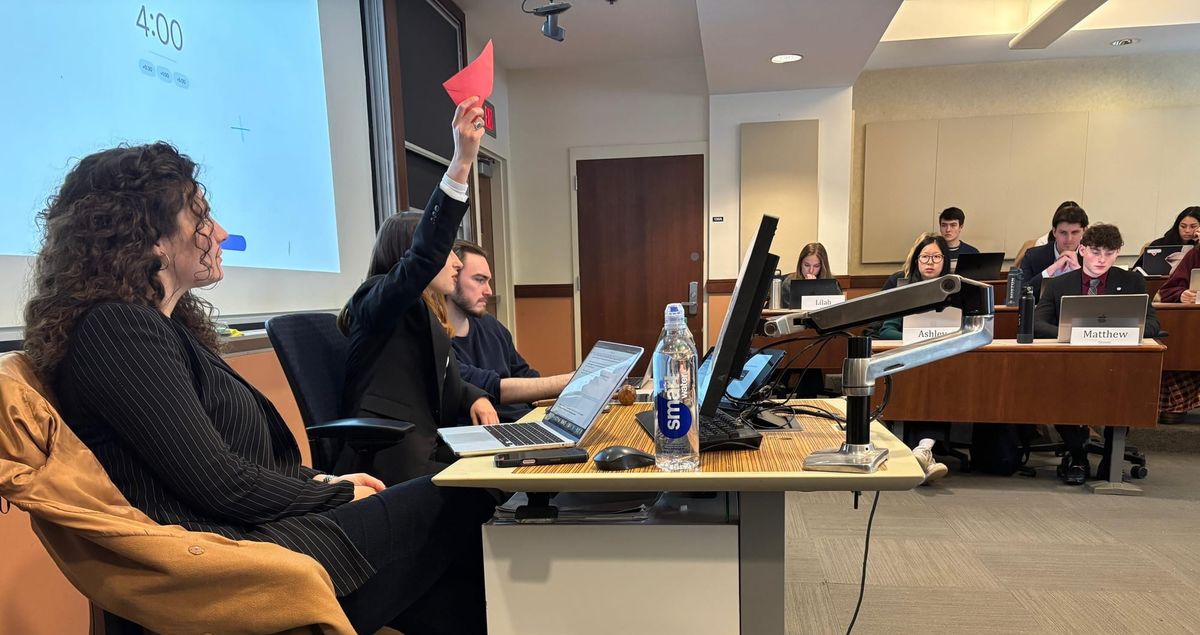
Two inaugural courses are asking students in the social sciences to grapple with artificial intelligence through the lens of the policymakers, diplomats, and analysts who will govern it.
We are witnessing a pivotal moment in how artificial intelligence intersects with governance, democracy, and global power. In just the past two years, AI-related legislation has been introduced in all 50 U.S. state legislatures, the European Union has enacted the world's first comprehensive AI regulation, and the United Nations has convened its first high-level advisory body on the technology's global implications. Just a few weeks ago, the U.N. General Assembly approved a 40-member global scientific panel to examine the impacts and risks of artificial intelligence. Across the globe, AI demands serious, informed engagement from governments, institutions, and citizens alike. Our classrooms should be no different.
Yet across higher education, the vast majority of AI coursework remains housed in computer science and engineering departments. Even in the workforce, the Organization for Economic Cooperation and Development finds that most AI-related training continues to target AI professionals, with little emphasis on building broader AI literacy across other disciplines. If the next generation will be the ones to interrogate, regulate, and govern AI, should we not go further than training students to build and advance these systems?
This semester, Northeastern University took a meaningful step toward closing that gap. POLS 4580 Special Topics: AI, Politics, & the Economy and INTL 2600: AI and World Politics represent the university's first formal effort to embed artificial intelligence education within the College of Social Sciences and Humanities (CSSH). Together, 54 students are enrolled across both courses. That figure represents just 2.5% of CSSH. As AI reshapes how we govern, legislate, and hold power accountable, the demand for this education will only grow. Two courses are a start, but 2.5% is not enough.

Two Courses, Two Lenses
The two courses examine AI through separate but complementary lenses. Together, they offer students a comprehensive view of a technology that is reshaping our world in real time.
POLS 4580, a special topics seminar taught by Beatrice Magistro, Northeastern's first Assistant Professor of AI Governance, examines AI through a domestic lens. The course explores how technology is transforming labor markets, economic inequality, voting behavior, and political attitudes. Will AI eliminate your future job or create new opportunities? Why does technological disruption fuel populism? Should governments regulate AI, and who bears the cost when they don't? The course seeks to spark discourse on these highly contentious questions supplemented by new and upcoming research.
"What I want for people when they walk out of this class is to have a completely new understanding of AI based on its trade-offs, its economic and political costs and benefits," Professor Magistro said. "I think a lot of students come in very pessimistic about the future, and I hope that approaching AI through those trade-offs can actually give them a more hopeful outlook."

INTL 2600, taught by Professor Denise Garcia, Commissioner on the Global Commission on Responsible AI in the Military Domain, seeks to expand upon domestic frameworks and examine them at a more macro level on the global stage. Professor Garcia has spent over a decade at the intersection of AI and international security, from observing autonomous weapons treaty negotiations in Geneva to helping establish what she calls "the first rules of the road" for AI in the military domain. In her course, AI is examined as a geopolitical force, a technology already reshaping the balance of power between nations, transforming the character of warfare, and exposing gaps in governance that existing international institutions are struggling to fill.
"There was no course on AI in the curriculum of the whole college," Professor Garcia said. "This course intends to fulfill this mission of having a course for the whole college and for other college students to come and examine the pressing issues that are at hand, which is the impact of AI on international relations, on peace, security, and on international law."
Why Social Scientists Deserve a Seat at the Table
The decision to offer these courses reflects a broader recognition that AI governance cannot be left to technologists alone.
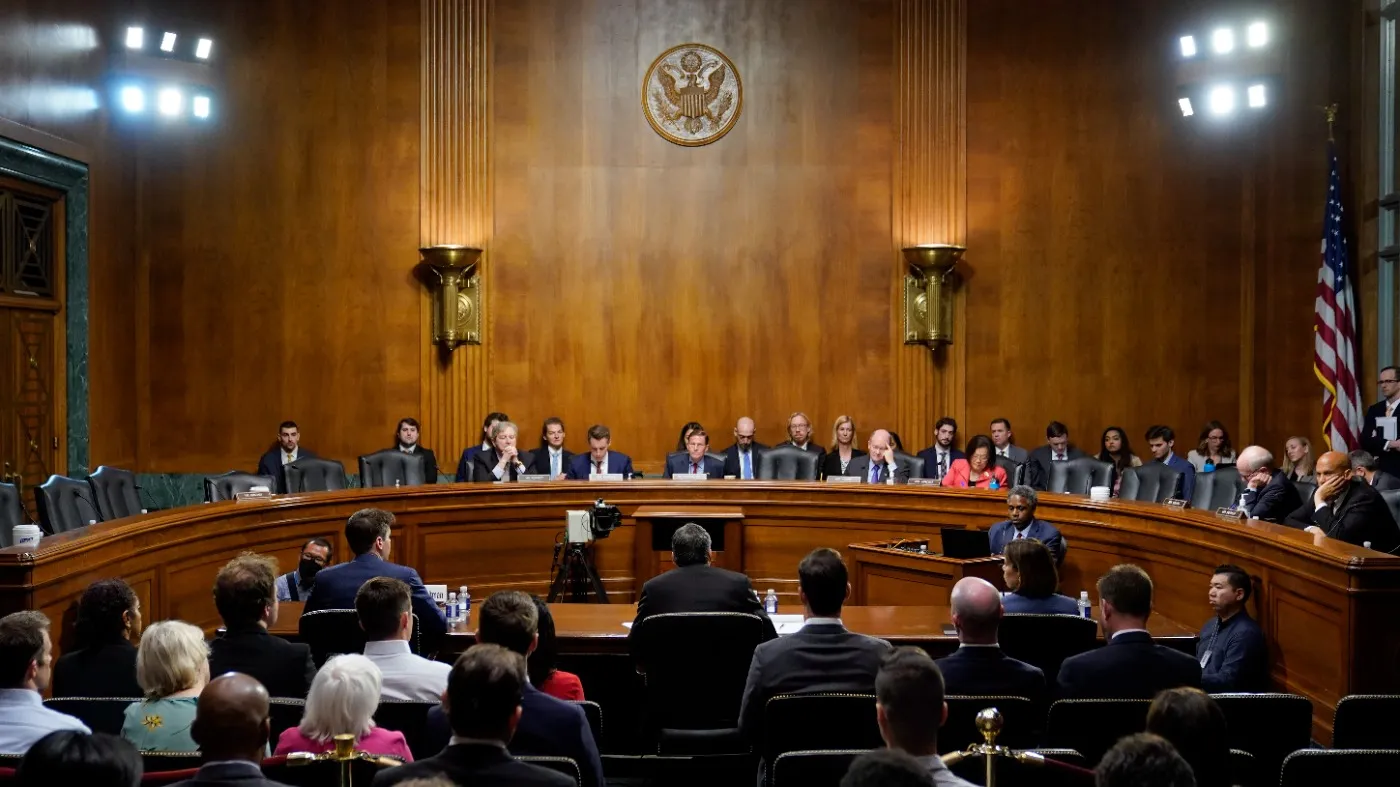
The EU AI Act, which entered into force in 2024, was drafted primarily by lawyers and policymakers, many of whom were learning the technical aspects of AI in real time. In the United States, a Congress whose members average 60 years old has repeatedly struggled to keep pace with the technology it is trying to regulate, with hearings on AI exposing how little legislators understand about the systems they are attempting to govern. This disconnect, Professor Magistro argues, extends far beyond the senior center on Capitol Hill.
"The bigger problem is that people who are technical on AI have no clue about the political economy of AI and the governance dimension," she said. "Right now, there aren't enough political economists and political scientists involved in the discussion around AI."
The lesson is already written in recent history. "COVID was the most important example. In the end, most of the social distancing measures were not determined by science at all, but by politics."
Professor Garcia frames the imperative from the other side. Social scientists, she argues, are "perfectly placed to examine the international legal ramifications of technology, the ethical implications, the political, the societal implications." But the work is not adversarial. Computer science students and engineers bring deep technical knowledge, and they too are concerned about societal consequences. "We are the ones making the bridge between the technical and the impact that the technologies have," she said, "and together we are an unbreakable force."
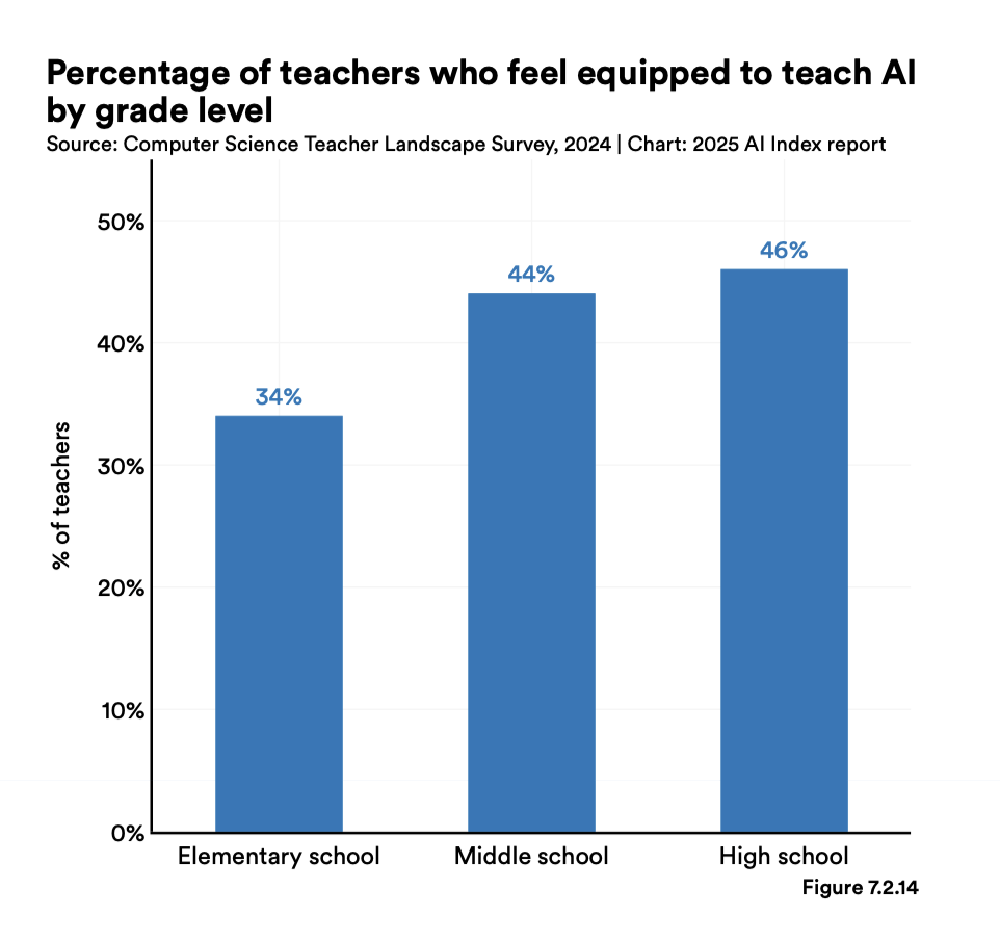
According to the 2025 Stanford HAI AI Index Report, less than half of computer science teachers feel equipped to teach AI, despite 81% agreeing it should be part of foundational education. If even the educators training future technologists feel underprepared, the case for bringing AI into social science classrooms becomes even more urgent.
Challenging Assumptions
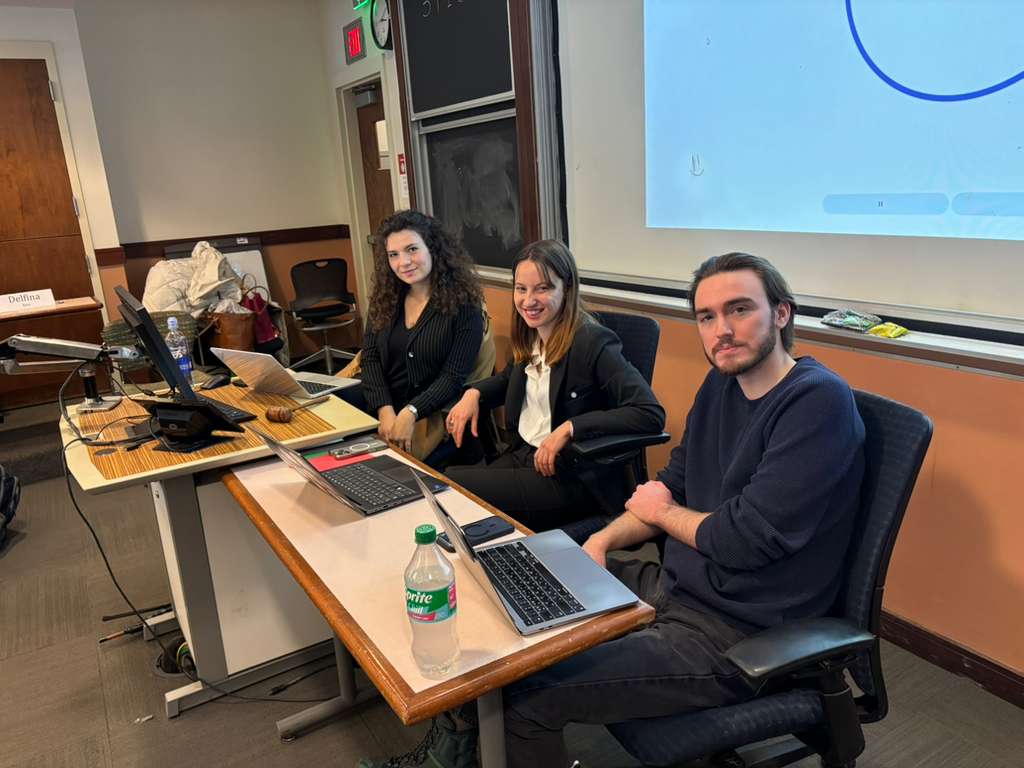
For students in both courses, the most consistent string is that the material has challenged assumptions they did not realize they held.
Professor Magistro admits she was nervous about whether undergraduates would embrace the course. "I was definitely scared. I didn't know if students would be more used to a frontal lecture," she said. "But people are always doing the readings. They're excited. They're presenting well. There's never been a time where there weren't any questions." Professor Garcia echoed this sentiment: "I feel energized to walk into our classroom every day and see all of you, how you really rose to the challenge."
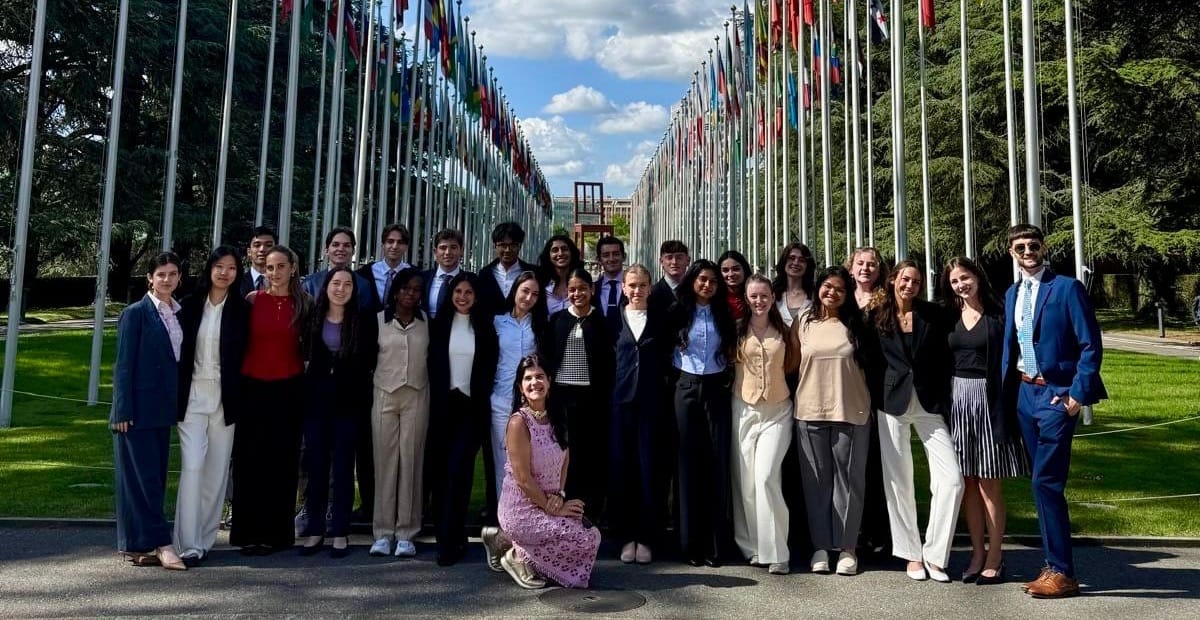
Geneva Palmer, a 4th-year pre-law student in AI, Politics, & the Economy, referred to the course as "probably the class at Northeastern where I feel like everyone around me actually wants to be there and actually cares." She credited the course with cutting through the noise that dominates public discourse around AI. "A lot of what's being produced is more fear-mongering," she said. "The actual data and the actual stories, a lot of it is, yes, unknown, but we're not necessarily headed straight to hell. A lot of my peers don't have that perspective, and I wouldn't either if I didn't have this class."
This shift from fear to fluency was a common thread. Ashley Zhang, a 2nd-year student in AI and World Politics, came in self-described as "very pro-AI" but found that the course complicated her thinking, particularly on militarization. "If this isn't something that we think through and we just put AI into the war zone without the proper legal regulations, it could end really badly," she said. Furthermore, Aria Gilchrist, a 4th-year student studying both Computer Science and Political Science, entered AI, Politics, & the Economy expecting the economic impacts of AI to "hurt more than it will help" but now feels "somewhat less scared" after engaging with the course material. Finally, Alex Booker, a third-year student in AI and World Politics, described the course as building directly on her co-op at a Washington lobbying firm, where she worked with international clients that first exposed her to the intersection of technology and global affairs. "I think it's really important for everyone to understand just how much this is about to change our lives," she said, "and how we should go forth with that knowledge."
Several students pointed to how the courses connect to Northeastern's experiential learning model. Palmer, who held co-ops at both the U.S. Attorney's Office for the Southern District of New York and Goodwin Procter, described watching AI's role in the legal profession transform in just two years, from limited transcription tools under strict security protocols to firm-wide chatbots for every attorney. Gilchrist's first co-op at an AI startup gave them a firsthand look at the volatility of the industry, while their second co-op at a robotics firm led to a full-time offer. It is clear that students are currently in a feedback loop where their understanding of AI built in the classroom is informing their role in the workforce and vice versa. If we can further empower students, challenging their assumptions and equipping them with tacit knowledge of the implications of AI, the future of technology policy will be in far more capable hands.
What Comes Next
Two courses are a start, but the work of integrating AI into the social sciences is far from finished. At Northeastern, the roadmap is already taking shape.
"The original idea was to create a master's program alongside the D'Amore-McKim School, where people could choose a more technical path or a less technical path, but with foundational courses that overlap, things like AI ethics and the political economy of AI," Professor Magistro said. "I think it's going to start as a concentration in programs like urban informatics or the master of public policy, and then expand to actual programs, and possibly minors or even majors."
The expansion extends beyond the School of Public Policy and Urban Affairs. New faculty searches are underway at the law school and in communications, both cross-appointed with the Policy School and focused on AI. "The university is expanding, and there might be more in the coming years," Professor Magistro noted. At a time when universities across the country are facing historic budget cuts, Northeastern's continued investment in AI governance faculty signals serious institutional commitment.
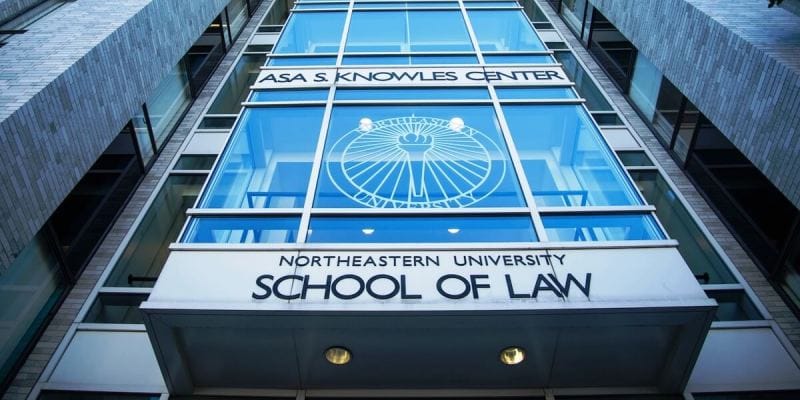
Professor Garcia's own trajectory reflects the ambition. Beginning in July, she will embark on a year-long research sabbatical, during which she will teach a condensed version of AI and World Politics at Northwestern University as a visiting Roberta Buffett Professor, creating what she described as "a Northeastern-Northwestern bridge." She is also curating a three-part lecture series on AI and international law in partnership with Northeastern's Global Law and Justice Center at the School of Law.
"We're just getting started," Professor Garcia said. "We always open the path for everyone else."
As AI systems become more deeply embedded in the institutions that govern our lives, we must rise to the occasion and tackle its complexities head on. Technologists and social scientists alike must work together to implement fact-based policy that will allow humanity to benefit from our own discoveries without eroding our sacred, democratic values. The time is now.