

Getting Past the Bots: Oakland Dean Dan Sachs on Proximity, People, and the AI Economy
Northeastern’s Oakland campus sits just a short drive away from the hundreds of companies on the Bay Area’s
Northeastern’s Oakland campus sits just a short drive away from the hundreds of companies on the Bay Area’s

This fall, Northeastern's Khoury College of Computer Science replaced its undergraduate data science programs with artificial intelligence programs.

As Executive Director of the Alliance for Innovation and Infrastructure (Aii), Benjamin Dierker oversees the think tank's independent


As a computational modeler, the Director of Participatory Modeling and Data Science in the College of Social Sciences and Humanities, and Co-Director of Northeastern's NULab for Digital Humanities and Computational Social Science, Professor Moira Zellner’s career has been built on using simulations and models to help communities navigate complex problems. From stormwater management to urban resilience planning to delta land management, she has secured millions of dollars in research funding from the NSF, the EPA, the Andrew Mellon Foundation, and others to support her impactful, interdisciplinary work.
During my recent interview with Professor Zellner, I asked her about the role of AI in society, its implications for governance and education, and what gaps her work seeks to fill.
Professor Zellner generally spoke with an urgency that challenges the optimist narrative that has dominated conversations about artificial intelligence–especially at Northeastern University. Her primary concern is not that AI is too powerful, but that the dialogue around it is too shallow. In other words, we are too focused on what the technology can do and not on what it can and is doing to us.
"I understand the enthusiasm," she said. "I understand the wish for this to work, and all the bets that have been placed on it. But it's all very speculative, and it's not very deeply thought out."
Professor Zellner does not dismiss concerns about bias, job displacement, or environmental costs that are inseparable from AI. However, our conversation was repeatedly drawn back to the discussion of what happens when our ability to think, reason, and connect with each other is ceded to a machine.
"It really does not allow us to learn," she said. "It does not allow us to think. It is designed to replace human thought, and especially human critical thought."
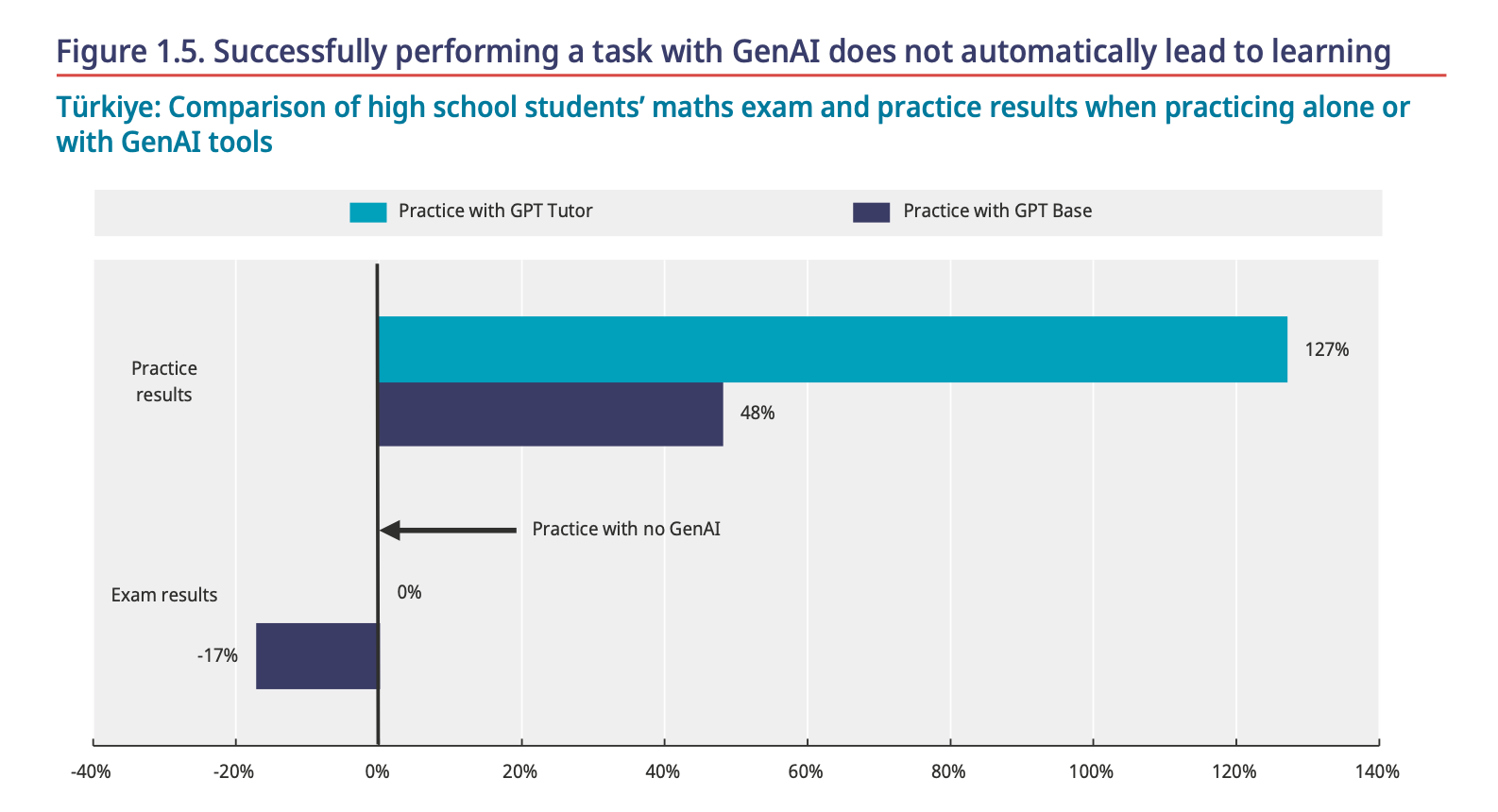
This is particularly dangerous, she argues, when AI is introduced in educational settings. The OECD's 2026 Digital Education Outlook found that when students rely too heavily on generative AI, metacognitive engagement declines and a misalignment forms between task performance and genuine learning. "If you have technology that can help you, that's great," Professor Zellner said. "But if you don't, then what do you do?"
Our conversation reflected a theme at the center of Professor Zellner's work. Human connection, as she puts it, is not a sentimental ideal but the practical foundation of a well-functioning society.
She described this capacity to relate to one another as something that "just cannot be replaced" and, more importantly, something that "shouldn't be, because it really just unravels and obliterates the social fabric that we depend on to survive."
When machines become the interface for human relationships, she warned, the very nature of those relationships comes into question. "If we don't know how to relate to each other because we're all in our machines and hooked to our machines... with what? With whom? Because now it's a question."
I raised a point that had come up during the most recent Klein lecture at Northeastern–that even if AI ultimately makes human competencies more valuable, there exists a clear risk of human interaction becoming a luxury that only the most privileged can afford.
Professor Zellner agreed, pushing even further. The problem, she argued, starts with how narrowly we define "human competency" in the first place. "It's so narrowly defined as computational," she said. "And yes, you can say that a lot of what we do is computation, like social computation, but we're much more effective at that social computation when we actually relate to each other."
Her position isn't anti-technology but rather anti-replacement. "For me, the importance and the strength of computational modeling is when we use these tools to learn how to think and relate better," she explained. "Ultimately, it's about us developing that reasoning and relational ability, because we engage with the computers to help us think individually and collectively–not to replace our thinking."

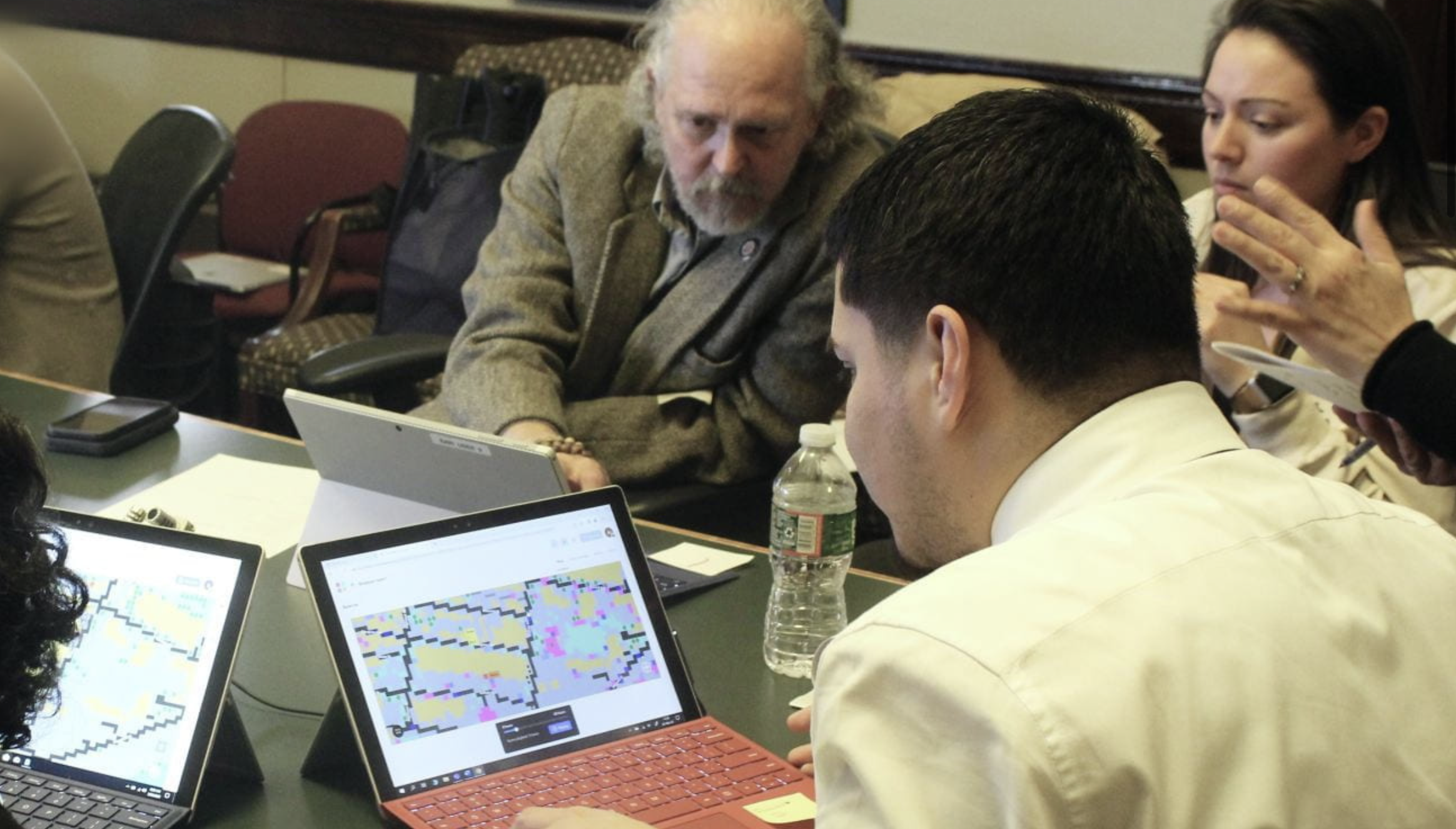
The aforementioned philosophy is the driving force behind Fora.ai, a participatory modeling platform that Professor Zellner has been developing at Northeastern. The name–"fora"–is the Latin plural of "forum," and is designed to create spaces where diverse groups of people can come together, explore complex problems through data and simulation, and arrive at collective solutions.
Fora.ai works through iteration, where participants propose solutions to a problem and can test them accordingly through simulation. They see the results, discuss what happened, adjust their approach, and try again. The process surfaces not just what works, but for whom it works.
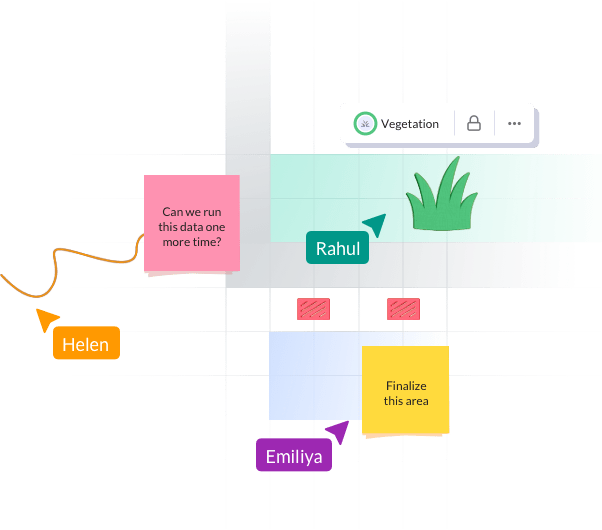
"It's not about just the output," Zellner explained. "It is about what happened through it." She tracks how participants converse, what assumptions they bring, how their expectations align or diverge from the simulation results, and how they negotiate toward agreements that account for different points of view.
I asked whether AI could eventually replace the human facilitators who guide these sessions. Professor Zellner's answer was simple: "Never, ever. We need facilitators who are humans."
The role of AI in Fora.ai, she clarified, is strictly about scale and helping facilitators manage larger groups. "The tech cannot replace the dialogue," she said. "The dialogue has to happen."
One of the most surprising details of Professor Zellner's teaching practice is what she includes alongside the more technical material. In her participatory modeling class, students learn meditation and improvisational theater, "absolutely essential skills" according to Professor Zellner.
Meditation, she explained, cultivates the mindfulness and ethical engagement that participatory work demands. "You need to slow down and actually listen more than say and pontificate."
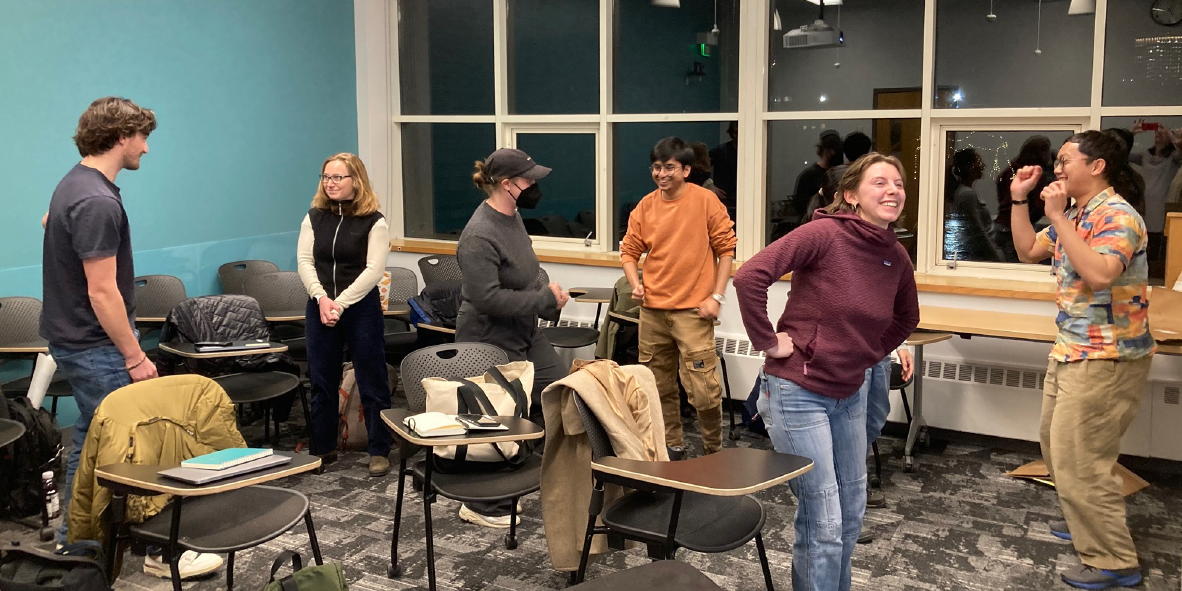
Improv, on the other hand, mirrors the dynamic nature of the work itself. In participatory modeling sessions, facilitators face unpredictable situations with diverse groups of people, all bringing in different ideas and priorities. "Something's thrown at you, and you need to build something with it, and we're doing it in collaboration," she said. "Improv theater is a wonderful metaphor for participatory modeling."
Toward the end of our conversation, Professor Zellner offered a memorable analogy from her system dynamics teaching that really tied together the concepts we discussed and offered a nice conclusion to our conversation.
If you can imagine a weed growing on a lake that doubles in size every day. When the lake is half full, how long until it's completely covered? How long until the entire lake is uninhabitable?
One day.
"The more time you delay, the less time you have to do something about it," she said. "If you don't want that lake to fill up, because that means the lake is dead, and so is all the fish that you depend on, then you don't want to wait until it's half full, because then you only have a day."
She paused. "And that's the situation we're in."
The AI industry, climate change, the concentration of wealth, the erosion of democratic norms… all of these, she argued, illustrate the issue of problems appearing manageable until suddenly they aren't.
"We've been saying this for forty years," she said. "We had forty years. And we haven't budged."
I asked her what stands in the way of her work, and the simplest answer she provided was a lack of funding. Fora.ai needs capital to move from a prototype to a widely implemented product. In doing so, Professor Zellner has and is working diligently to seek support from sources like the NSF and philanthropic organizations committed to computation for the common good.
Technology can provide data. It can run simulations. It can help us see complexities that would otherwise remain absent from policy conversations and public discourse. However, it cannot replace sitting across from someone with different priorities, listening to what they need, and building something together.
That work, Professor Zellner insists, still belongs to us.
Professor Moira Zellner is a Professor in the School of Public Policy and Urban Affairs, Director of Participatory Modeling and Data Science in the College of Social Sciences and Humanities, and Co-Director of the NULab for Digital Humanities and Computational Social Science at Northeastern University. Her work on the Fora AI participatory modeling platform can be found at fora.ai.
Matthew Graves is the founder and editor-in-chief of NU Nexus. He is a third-year undergraduate studying Criminal Justice and Political Science with minors in Interdisciplinary AI, International Affairs, and Law & Public Policy.
Have a perspective on AI, participatory governance, or the intersection of technology and society? NU Nexus welcomes submissions from all Northeastern students.

Northeastern’s Oakland campus sits just a short drive away from the hundreds of companies on the Bay Area’s

As Executive Director of the Alliance for Innovation and Infrastructure (Aii), Benjamin Dierker oversees the think tank's independent
Northeastern students on technology, policy, and society. Every Thursday.