

Northeastern’s AI Degree Is a Promise, Not a Rebrand
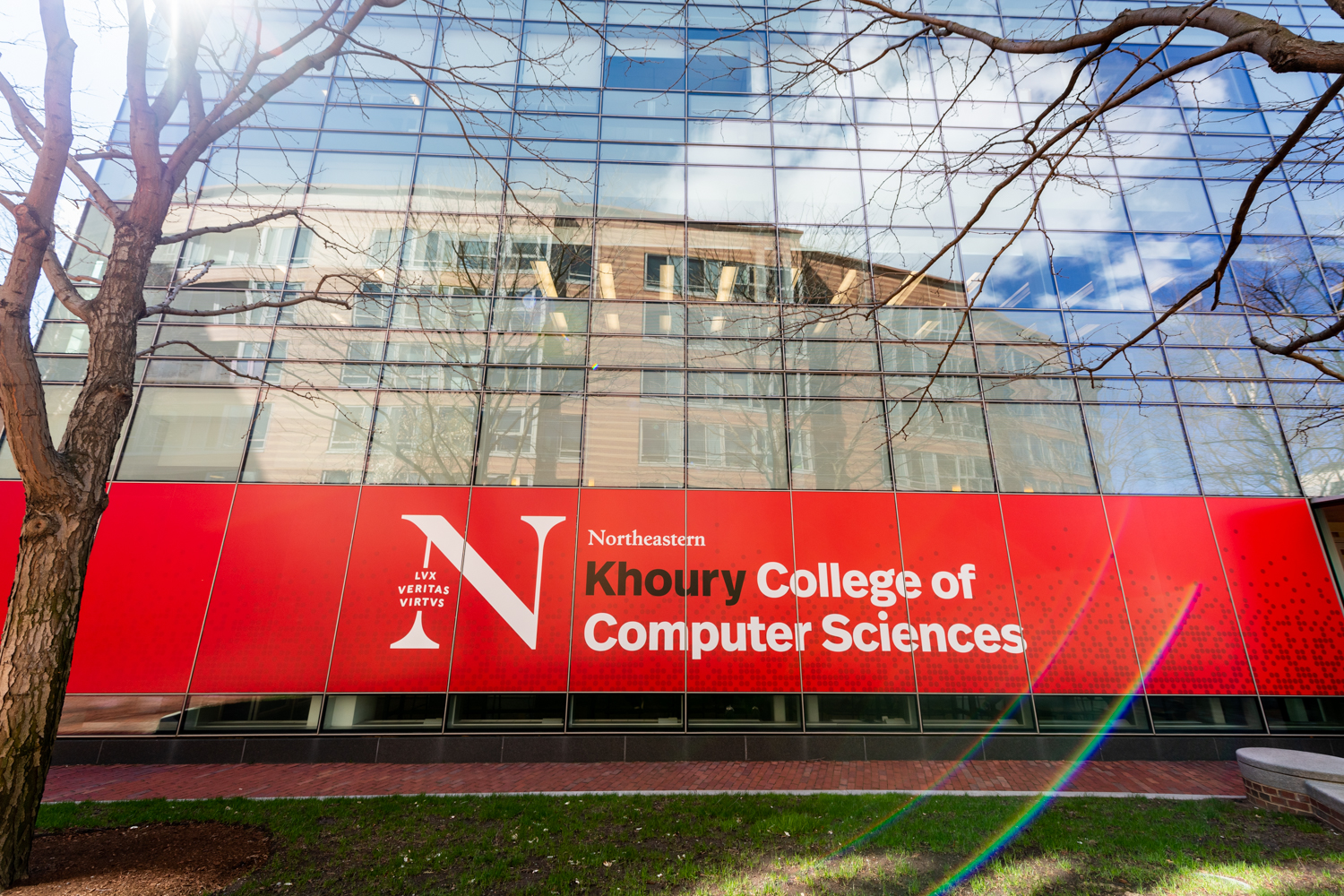
This fall, Northeastern's Khoury College of Computer Science replaced its undergraduate data science programs with artificial intelligence programs.
This fall, Northeastern's Khoury College of Computer Science replaced its undergraduate data science programs with artificial intelligence programs.

As Executive Director of the Alliance for Innovation and Infrastructure (Aii), Benjamin Dierker oversees the think tank's independent

As a computational modeler, the Director of Participatory Modeling and Data Science in the College of Social Sciences and Humanities,


This fall, Northeastern's Khoury College of Computer Science replaced its undergraduate data science programs with artificial intelligence programs. The Bachelor of Science in Data Science is now a Bachelor of Science in Artificial Intelligence, and the university's data science combined majors have followed suit.
At first glance, the change is easy to dismiss as branding, an attempt to attach a marketable acronym to an existing program. AI is everywhere, and renaming 25 undergraduate programs without fundamentally changing what students learn can look more like marketing than education. However, a more marketable name can also be one that is more accurate. And that is precisely what Northeastern has done in renaming programs to represent what students were already learning.
In a meeting with Christo Wilson, associate dean for academic programs and student experience at Khoury College, the Northeastern Student Government Association's (SGA) Vice President of Academic Affairs along with the chair of the SGA AI Advisory Board uncovered an intriguing phenomenon. They learned that Northeastern had faced an unusual problem with its data science degree: the name was not accurately communicating what students were learning. At other universities, data science programs are commonly rooted in statistics. Northeastern's was built more on computing, with substantial AI and machine learning coursework.
At a university where cooperative education is designed to connect academic training directly into employment, discrepancies like this matter significantly. Co-op employers who encountered Northeastern data science students found backgrounds that differed from what they expected from conventional data science programs.
Khoury College makes the same argument publicly. Its transition FAQ explains that aside from changes to DS 3000: Mathematical Foundations of Artificial Intelligence as a degree prerequisite, the college says that neither the program's learning outcomes nor course specifics are changing. This reinforces Northeastern's argument that the old name had ceased to accurately describe the education it was already providing.
A degree title is, first and foremost, a signal.
Students use degree titles to communicate their training to employers, and employers use it as shorthand for what applicants are expected to know. If co-op employers routinely misunderstood what Northeastern data science students had been taught, that signal was failing. A more accurate name benefits both sides.
The new name also reflects where technical work is headed. AI expertise is not required for every job, but the ability to work competently with AI is rapidly becoming less of a specialization and more of a baseline skill in technical professions. Upwards of 5% of new skills posted in job listings in the United States in 2025 were AI-related.
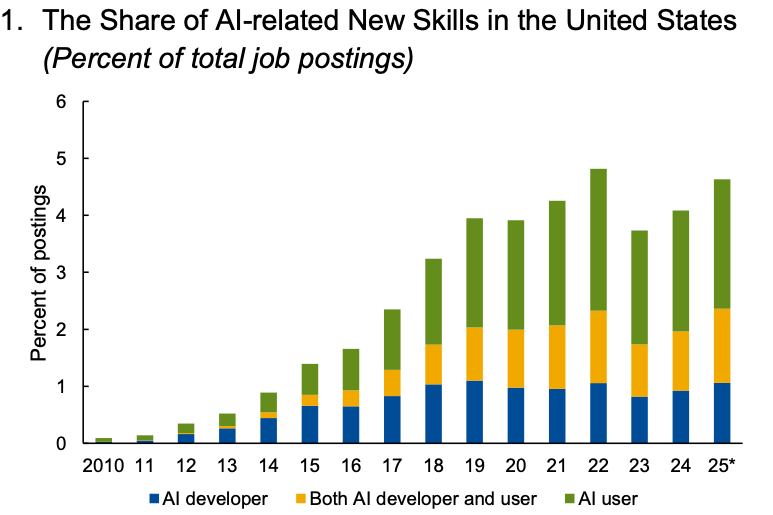
Explicit job-posting requirements capture only part of this shift. In any occupation, knowing how and where AI can improve their work becomes an optimization asset in the workforce, increasing efficiency and expanding what an individual worker can accomplish. For a university that places extraordinary emphasis on preparing students for employment through its co-op program, reflecting that change in its curriculum—and accurately communicating it through degree names—is only sensible.
But the new name raises the standard by which Northeastern's program should be judged. Renaming the existing program may have corrected yesterday's mismatch, but it does not guarantee that an AI degree will accurately describe what tomorrow's graduates know.
AI is an unusually fast-moving field. Generative AI has already changed what it means to work with machine learning systems, write code, and analyze information. The tools and competencies employers associate in 2030 will differ from the associations of today. By putting AI on student diplomas, Northeastern assumes some responsibility for keeping pace with it.
That does not mean discarding the foundations of data science, rather the opposite is true. Statistics, data management, and mathematical reasoning become more important when powerful models can produce convincing yet incorrect results. Students need to understand the systems underlying the interfaces they utilize. An AI degree should also continually engage with the actual practice of contemporary AI: evaluating model outputs to determine when they should be integrated into larger systems, navigating privacy and security issues, and knowing when AI-based approaches are more or less appropriate than conventional ones.
For combined majors, Northeastern has the opportunity to go further. An AI and biology degree should not only teach the two disciplines in parallel to one another, but how AI is changing the practice of biology, as tools like AlphaFold have already done for protein structure prediction. The university should therefore treat this rename not as completion of a curricular transition, but as a commitment to one.
Yet that commitment does not require an uncritical embrace of AI. The technology's rapid growth has brought legitimate concerns, ranging from labor displacement and environmental costs to privacy and copyright. In a June 2026 Pew Research survey, 71% of Americans said they expected increased AI use to make their personal information less secure, while the US Copyright Office has conducted a multipart inquiry into questions surrounding AI-generated works and the use of copyrighted material in model training dating back to 2023.
These concerns make rigorous AI education more important, not less. Teaching a consequential technology is not the same as endorsing every way it is developed or deployed; done well, it gives students the knowledge necessary to evaluate those choices themselves. If AI is going to increasingly shape the fields Northeastern students enter, graduates should be equipped to not only use the systems but understand the limitations, question the applications, and participate more meaningfully in decisions about how they should be used.
Additionally, the distinction that justified the renaming also requires addressing. Traditional data science should not disappear with the name. AI has not rendered the skills it would teach obsolete—they remain valuable and foundational to responsible AI development. This does not necessarily mean Northeastern needs to create a replacement major, but the university should consider where students seeking this more traditional education can now find it. AI's increasing prominence should not crowd out the quantitative foundations on which it depends.
If the old title was routinely misrepresenting what students knew, keeping it for tradition's sake would serve neither graduates nor employers. At a moment when AI competency is becoming increasingly embedded in technical work, the new name may ultimately prove more durable than the one it replaced. But a degree in AI is also a bigger promise: Northeastern does not need to reinvent its curriculum simply to justify changing the words on a diploma, but it does need to ensure that the program keeps evolving so that these new words do not require replacing.
Hope Hsieh is the managing editor of NU Nexus. She is a fourth-year student studying Political Science and International Affairs with minors in Linguistics and Law and Public Policy.

The 62nd Robert D. Klein Lecture made the case that AI is making us more human. The audience missed the

Two inaugural courses are asking students in the social sciences to grapple with artificial intelligence through the lens of the
Northeastern students on technology, policy, and society. Every Thursday.