

AI Is an Issue of Climate Justice
“All human beings are born free and equal in dignity and rights,” declares Article 1 of the Universal Declaration of
“All human beings are born free and equal in dignity and rights,” declares Article 1 of the Universal Declaration of


Northeastern’s Oakland campus sits just a short drive away from the hundreds of companies on the Bay Area’s

This fall, Northeastern's Khoury College of Computer Science replaced its undergraduate data science programs with artificial intelligence programs.


“All human beings are born free and equal in dignity and rights,” declares Article 1 of the Universal Declaration of Human Rights. Except when a data center is built next door and they live where the power grid is already under pressure. Except when drought grows more severe in susceptible places and cooling systems leave the local water supply thin. Dignity, it turns out, depends on where you live and who you are.
These problems are the visible edge of a larger pattern, one that draws on water, power, and data from the places and people least able to refuse. We argue that a necessary way to center dignity is to frame AI as an issue of climate justice.
Climate justice is both a question of fairness and rights. It asks who bears the burdens and who reaps the benefits, who has a voice in decisions, whose claims are actually heard, and who repairs past harm and protects future generations. Applied to AI, each question exposes a gap. A single large data center can draw up to 5 million gallons of water a day. In Ireland, data centers now claim nearly a quarter of the nation’s electricity. International climate law already offers models of environmental policy, from common but differentiated responsibilities to a dedicated fund for loss and damage. What is often missing is the data, and the will, to apply them to AI infrastructure.
The Problem of AI Data Centers
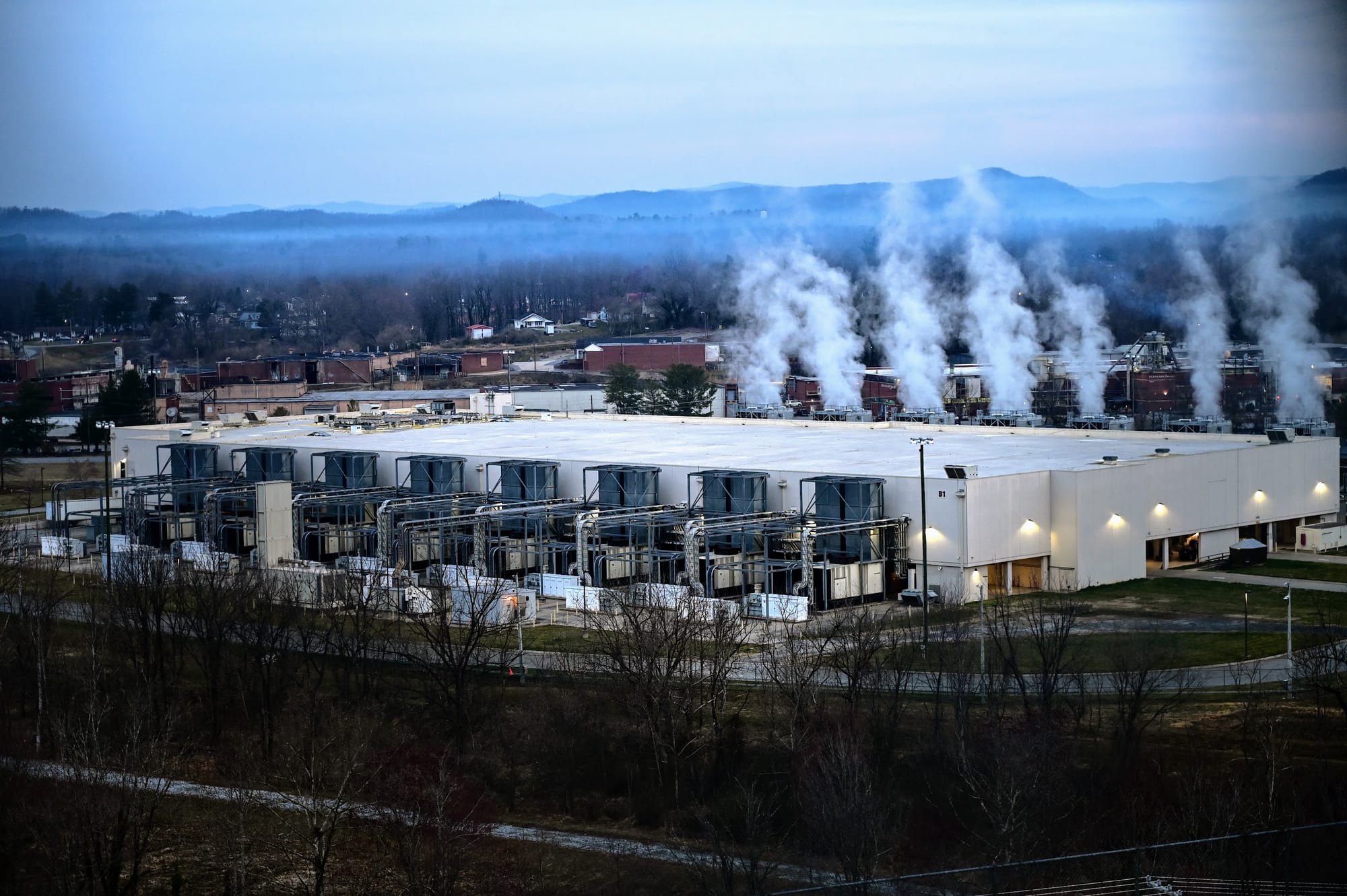
AI relies on enormous physical facilities known as data centers, which house the servers that train and run AI models. These centers require large amounts of electricity to operate nonstop. According to the Lincoln Institute of Land Policy, a hyperscale AI data center can consume as much electricity as 100,000 households or more. These facilities are expanding across the United States as the demand for AI grows, putting pressure on local electricity systems.
Google’s proposed data center in Pine Island, Minnesota, is planned at 780 megawatts of electricity. Under the proposal, Google would help finance 1,400 megawatts of wind capacity, 200 megawatts of solar, and 300 megawatts of battery storage. The sheer scale of this type of development reshapes local energy systems and, in some regions, has driven up costs for existing electricity customers. The environmental and economic consequences of such expansions are not distributed equally across society; vulnerable communities are at a much higher risk.
Deepening Environmental and Economic Inequalities
The consequences of data centers run much deeper than their massive electricity consumption. These centers place pressure on natural resources, which can increase economic burdens that then worsen inequalities in communities that are already vulnerable. One of the most concerning consequences is water scarcity. Data centers need substantial amounts of water to be able to cool their servers, much of it drawn from local water supplies. Approximately two-thirds of data centers built since 2022 are located in water-stressed regions. Access to water is a recognized human right, yet when technological advancement requires resources that communities depend on for their basic needs, the human right to water gets deprioritized.
The financial cost of AI development will fall on communities that receive relatively few of its economic benefits. An estimated $16 billion could be added to customers' electricity bills in Ohio due to a data center expansion between 2027 and 2034 under existing policies. Lower-income families who already struggle to afford basic necessities are more vulnerable to these increases, while wealthier households may be better positioned to absorb rising utility costs.
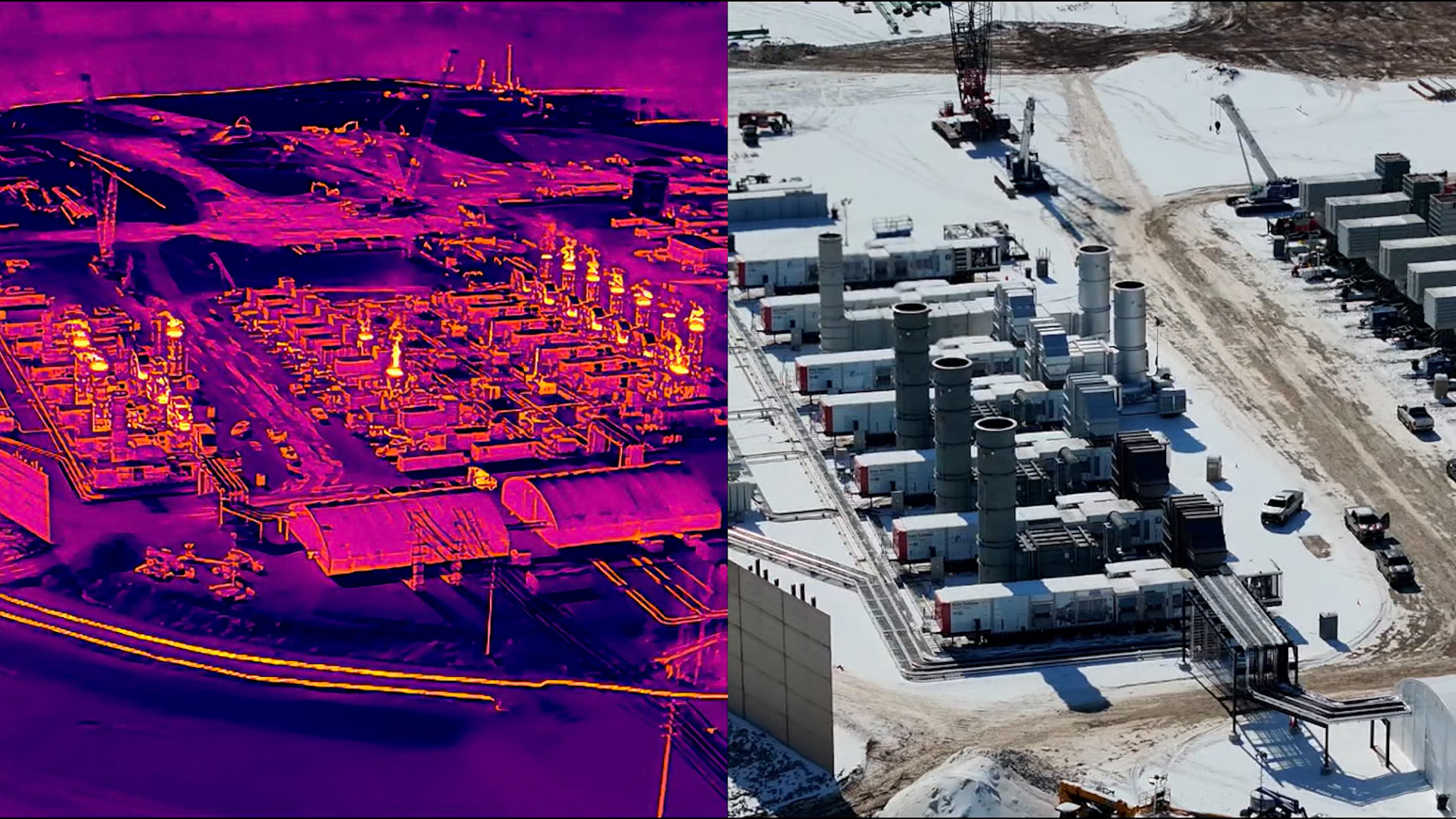
These inequalities are particularly evident at Elon Musk's xAI Colossus data center in Memphis, Tennessee. The facility is located near predominantly Black neighborhoods where residents have historically experienced high levels of industrial pollution. To meet its electricity demand, xAI operated natural gas turbines, some without air permits, raising concerns about additional air pollution and health risks to meet its electricity demands. Vulnerable communities will face greater pressure on their natural resources, they will face higher living costs and additional unnecessary environmental health risks. This is a serious infringement on human dignity. Technological progress cannot be considered progress if it comes at the expense of people's ability to access essential resources.
International Responsibility
These harms are not inevitable, and global cooperation has changed industry behavior before. As Northeastern’s Professor Mai’a Cross discusses in her book International Cooperation Against All Odds: The Ultrasocial World, the Paris Agreement helped establish net-zero as a global norm. Corporations supported the agreement by urging governments to invest in emissions-reduction technology and asking the U.S. to remain in the agreement. Critics warn that restrictions could slow the U.S. AI buildout while China accelerates. The Paris Agreement suggests otherwise: companies backed climate action once it aligned with their business interests (C2ES, 2018; The B Team, 2017). As researcher Kate Crawford describes in her book Atlas of AI: Power, Politics, and the Planetary Costs of Artificial Intelligence, a net-zero and water-positive standard for AI infrastructure could work the same way, aligning cleaner operation with business interests while addressing the mineral extraction behind the supply chain.
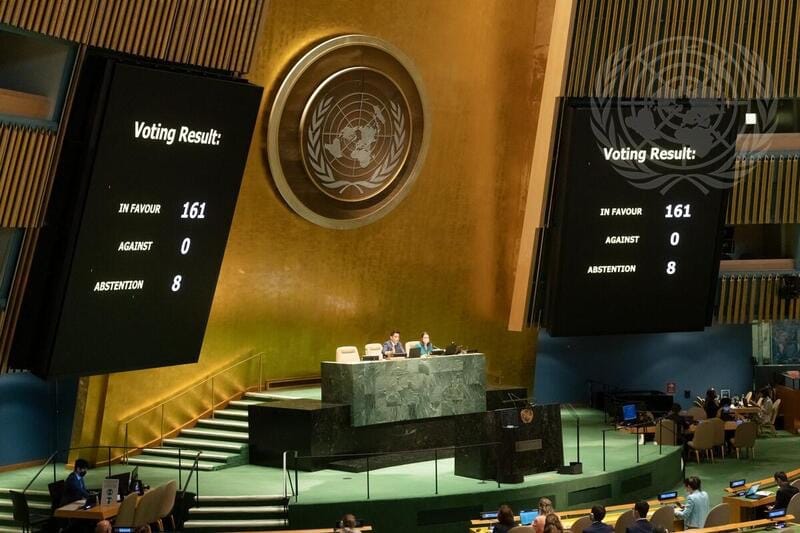
In 2010, the UN General Assembly recognized the human right to water and sanitation, and in 2022, the right to a clean, healthy, and sustainable environment, by a vote of 161 to 0. In 2025, the International Court of Justice’s advisory opinion recognized a clean, healthy, and sustainable environment as a precondition for human rights, and emphasized states’ obligations to exercise due diligence in protecting the environment from harm caused by private actors. These principles are relevant to the expansion of AI infrastructure, whose demands for water and energy can place pressure on local resources and leave communities bearing the costs. A net-zero and water-positive standard for AI infrastructure could help translate these broader environmental principles into concrete expectations for data center development, encouraging companies to reduce emissions, manage water use responsibly, and account for the environmental burdens placed on surrounding communities. Although international human rights principles provide a foundation for this approach, they have not yet been specifically applied to AI infrastructure.
Climate justice turns these harms into a framework with shared principles of fairness and responsibility, and with the proper legal mechanisms that international law can build on. The United Nation University’s Institute for Environment and Human Security names five key dimensions of climate justice, including distributive, procedural, recognitional, and restorative justice. Distributive justice suggests reviving the principle of common but differentiated responsibilities so that the greatest responsibility falls on companies with the greatest capacity. Procedural justice demands disclosure and a real voice for affected communities. Recognitional justice means taking local and Indigenous claims seriously, as New Zealand did in 2017 when it granted legal personhood to the Whanganui River. Restorative justice points to mechanisms like the loss and damage fund, which moved funding from principle to institution. In The AI Military Race, Northeastern Professor Denise Garcia adds an intergenerational duty to protect those who will inherit the consequences.

This frame also strengthens the case for international action. As Professor Cross argues, climate justice protects the climate and the world’s most vulnerable together, which makes it a global common good. This is what gives it traction. Framed this way, AI governance can move from technical regulation toward a shared norm and, eventually, concrete international law.
We can draw on precedent, including the Montreal Protocol and net-zero norms, and the concept of transparency. Actors are less likely to break norms when they are being watched, states Professor Cross, yet developers often rely on non-disclosure agreements that hide water, energy, and emissions data from communities. For example, Governor Abbot paused approvals pending an audit that asks for water data. Standardized public reporting should become a precondition for operating anywhere, because a community cannot claim a voice in decisions it cannot see.
The Montreal Protocol shows the precaution can work in International Law. It regulated ozone-depleting substances before the science was conclusive. AI infrastructure deserves the same caution given how poorly its impacts are measured.

Article 1 of the Universal Declaration of Human Rights promises that all human beings are born free and equal in dignity and rights. The foundations to honor that promise already exist, in the recognized rights to water and a healthy environment and in precedents from Paris to Montreal. What remains is the data, and the will, to extend it to the infrastructure behind AI. Dignity does not have to depend on where you live and who you are. It depends on whether governments apply the rights we have already recognized to the machines companies are building.
Kathleen Ryder is the editor of Op-Eds and Commentary at NU Nexus. She is a third-year student studying International Affairs, with minors in Global Health and French.
Sama Mouzannar is the associate editor of Op-Eds and Commentary at NU Nexus. She is a second-year student studying Politics, Philosophy and Economics, with minors in Artificial Intelligence and Law and Public Policy.

This fall, Northeastern's Khoury College of Computer Science replaced its undergraduate data science programs with artificial intelligence programs.

The 62nd Robert D. Klein Lecture made the case that AI is making us more human. The audience missed the

Two inaugural courses are asking students in the social sciences to grapple with artificial intelligence through the lens of the
Northeastern students on technology, policy, and society. Every Thursday.
