

Getting Past the Bots: Oakland Dean Dan Sachs on Proximity, People, and the AI Economy
Northeastern’s Oakland campus sits just a short drive away from the hundreds of companies on the Bay Area’s
Northeastern’s Oakland campus sits just a short drive away from the hundreds of companies on the Bay Area’s

This fall, Northeastern's Khoury College of Computer Science replaced its undergraduate data science programs with artificial intelligence programs.

As Executive Director of the Alliance for Innovation and Infrastructure (Aii), Benjamin Dierker oversees the think tank's independent


Northeastern’s Oakland campus sits just a short drive away from the hundreds of companies on the Bay Area’s AI billboards. Its inaugural dean, Dan Sachs, argues that as more companies use AI as part of the hiring process, face-to-face connections and human skills are what will set students apart.
When Dan Sachs explains to colleagues in Boston what makes the Bay Area different, he starts with the drive from the airport. At Boston Logan, the drive into the city is lined with injury attorney ads and other traditional billboard ads. Land in San Francisco, and in any direction you travel, the billboards are selling AI.
“There’s nothing else,” Sachs said.
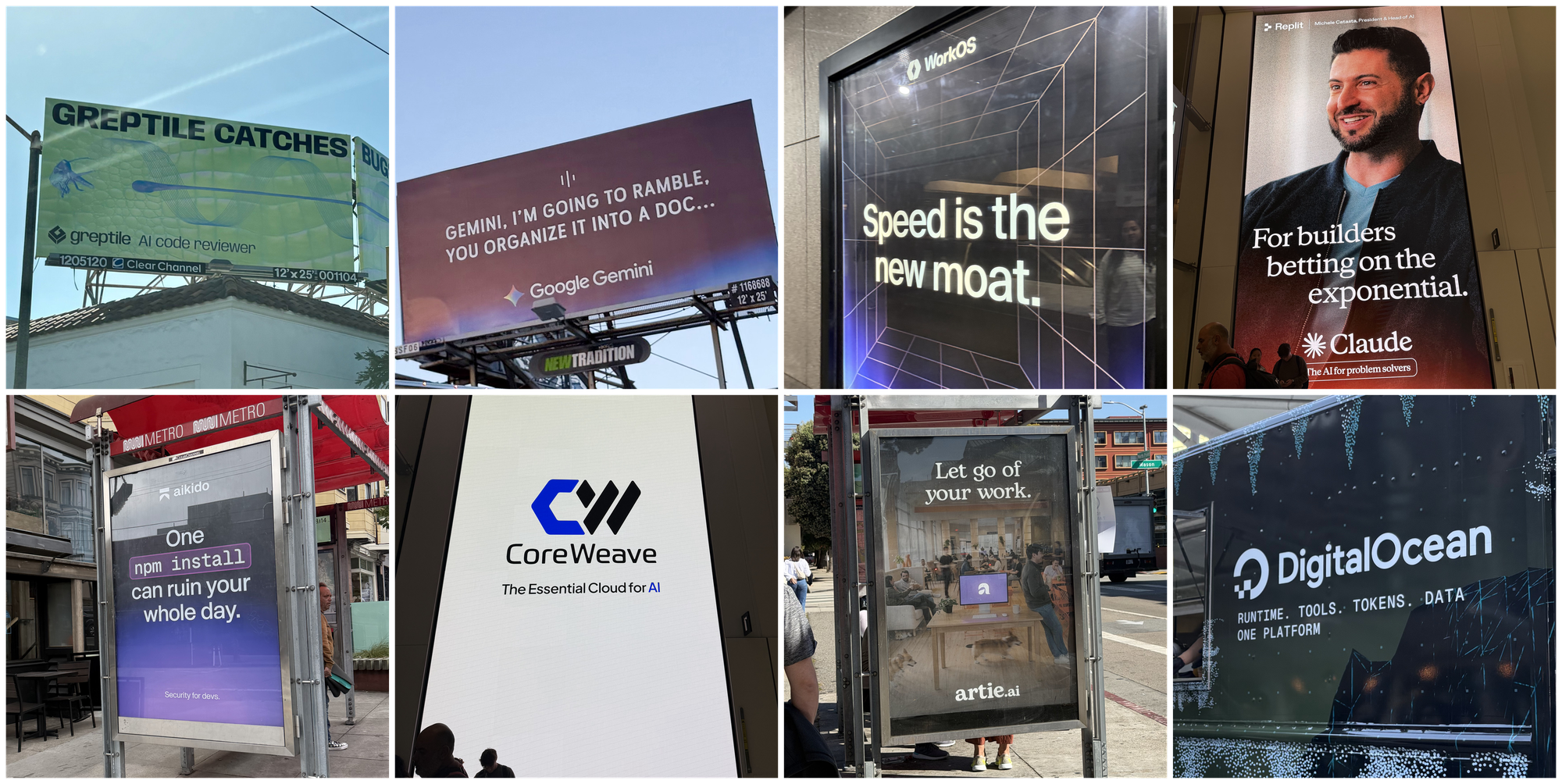
In our interview, Dean Sachs argued that as AI changes how students learn and look for work, where you are and who you know become key in landing a job.
The Bay Area as a classroom
The Oakland campus, which Northeastern formed through its 2022 merger with Mills College, is mostly an undergraduate campus. Sachs said undergraduates outnumber graduate students about five to one, though the campus hosts a diverse range of PhD students and postdoctoral researchers.
What sets it apart, he said, is location.
“Silicon Valley, San Francisco, and Oakland are the nexus of every new tech innovation, one way or another, and all the funding associated with it,” Sachs said. “As a student, regardless of what level you’re at, whether you’re thinking about research or you want to work at Apple or whatever it is, you have that immediate access to the ecosystem in a way that is unparalleled within all of Northeastern.”
I asked him for an example of how Oakland students can engage with the Bay Area’s tech scene through the university. He offered some insight into an upcoming event that was set to happen a few days after our interview. On Oct. 13, the Oakland and Silicon Valley campuses co-sponsored “Manage the Machine: An Evening with Paula Goldman” at SRI International in Palo Alto, CA. Goldman, Salesforce’s chief ethical and humane use officer, discussed her new book, Manage the Machine, in a conversation moderated by Caroline Simard, dean of the Silicon Valley campus. Oakland planned to send a 55-seat bus, he said, with about 40 undergraduates and a dozen graduate students. He also said the campus is arranging an undergraduate site visit to a robotics factory that Project Prometheus, the AI company led by Jeff Bezos, plans to open in Oakland.
“This happens every week, all the time,” Sachs said of student trips to tech companies and industry events around the Bay Area.
“You can’t throw a stone and not hit one.”
Getting past the bots
Recent college graduates are now more likely to be unemployed than American workers overall, a reversal of the usual pattern, according to the Federal Reserve Bank of New York. Young workers in AI-exposed fields are particularly affected. A Stanford Digital Economy Lab study found that employment of 22- to 25-year-olds in jobs such as software development is now 19% below where it would have been had it kept pace with less-exposed fields.
In response to the tough market for new graduates, Sachs stressed the importance of the basics: connections. “Your network is what really helps you move forward in your career,” he said.
Sachs said students in Oakland can start building relationships with companies from their first year. The alternative, he said, is what many students do now: “trying to navigate that over Teams or Zoom and be one of a bunch of people who are trying to do those interviews ... and get past the bots and everything that’s screening these resumes.”
“There’s a big difference between that and seeing somebody face to face at a conference or at a talk and building your network in a grassroots way,” he said. “I think that’s the game changer out here.”
Sachs also mentioned the importance of in-person networking beyond AI jobs. “It doesn’t necessarily have to be AI-driven, just anything related to innovation,” he said, referencing San Francisco’s array of fintech companies as an example.
AI for the city
Much of what Sachs described happens off campus. The Oakland campus runs the Social Innovation Launchpad, an accelerator in downtown Oakland that launched earlier this year with a large grant from the Kapor Foundation. Through the Launchpad, first-year students have the opportunity to work at startups that focus on social impact. One is working to make the city’s garbage pickup more efficient. Students also run AI clinics for small businesses, pairing undergraduates with graduate students to act as consultants and mentors. Sachs said the campus also serves as an AI innovation zone for the city of Oakland. Students and faculty have run AI training workshops for city employees and helped departments develop policies for using the technology.
Some of the work is smaller in scale. At a recent Senior Technology Day, students coached about 100 local seniors on everything from using Siri to managing AI tools. Sachs said he also led a talk on campus about workforce development with Louis Stewart, head of ecosystem development at NVIDIA, which Sachs said drew a couple hundred students and about 150 community members.
“Part of the responsibility of being an R1 institution ... is that we have to support the community,” Sachs said.
He ties the campus’s commitment to the Oakland community to the history of Mills College, which he stated “had a legacy of liberal arts education and community engagement.” He noted that Oakland’s mayor, Barbara Lee, is a Mills alum.

The Flywheel
For all its access, Oakland still mostly functions as a place where students start their academic journeys. Northeastern Global News reported that only 15 sophomores attended this fall’s convocation, returning to Oakland for their second year. President Joseph Aoun has said that undergraduates “can start in London, move to Oakland or New York, and finish in Boston.” Sachs said that the campus is actively building toward this vision. Recently, the College of Engineering launched a Bachelor of Science in Engineering Design, a four-year program exclusively offered in Oakland.
When I asked Sachs whether new programs alone would keep students in Oakland for all four years, he turned the question back on me: if Bose, Adobe and Intuit had offices on the Oakland campus, would I pick up and move to finish my degree?
“No, you wouldn’t, right?” Sachs said. “Because all your friends and your infrastructure and your family are on the East Coast.”
What would make that decision easier, he said, is knowing other students are making it too. “You can imagine an environment where you’re one of 15, you really have to want it,” Sachs said. “If there are 75 or 100 students staying, inevitably some of those are your friends. So all of a sudden, then it’s much easier to imagine yourself staying.”
“For us, the big effort now is how do we get to 50, 75, 100 students?” he said. “And then I think the flywheel effect will take care of itself.”
I asked Sachs about his vision for the Oakland campus in the near future. “In five years, Oakland is a fully activated, thriving four-year campus that offers all the bells and whistles that a Northeastern education offers in a smaller environment with easy, direct access to the most innovative ecosystem in the world,” Sachs said. “Period.”
That idea, he said, was central to President Aoun’s vision for the merger.

“Whole” people
AI already runs through the curriculum in Oakland, Sachs said, from philosophy and psychology to science and architecture. “Faculty in Oakland, because it’s part of the water here, are using AI in every class,” he said. He suggested that this is less true in Boston, where he guessed that some faculty still discourage students from using it. Under Northeastern’s AI policy, whether students can use AI in a course is entirely up to the professor.
Some questions about AI on the Oakland campus are still open. Khoury College of Computer Sciences renamed its undergraduate data science degrees as artificial intelligence degrees this fall, a change that, as NU Nexus has argued, commits the university to keeping pace with the technology. Sachs said he was not sure whether the new AI major would be offered in Oakland.
Sachs came to higher education by way of the restaurant business. He has launched and run hospitality ventures for more than 25 years and led the Polsky Center for Entrepreneurship and Innovation at the University of Chicago before coming to Oakland. When the conversation turned to what students need in an AI economy, he did not point to technical skills.
“At the end of the day, we’re looking to help support creating whole people,” Sachs said. “We’re not trying to crank out a bunch of tech robots. We want students who have ... communication skills, problem-solving skills, leadership skills, networking skills. Human skills are the ones who are going to excel in this economy.”
Some students, he added, will not go into tech at all, “and that’s great.”
“I can’t emphasize enough how important those additional skills are in this day and age,” Sachs said. “If you’re simply somebody who is technically proficient, I think you really will struggle to be successful in the new economy.”
Matthew Graves is the founder and editor-in-chief of NU Nexus. He is a fourth-year student studying Criminal Justice and Political Science with minors in Interdisciplinary AI, International Affairs, and Law & Public Policy.

As Executive Director of the Alliance for Innovation and Infrastructure (Aii), Benjamin Dierker oversees the think tank's independent

As a computational modeler, the Director of Participatory Modeling and Data Science in the College of Social Sciences and Humanities,
Northeastern students on technology, policy, and society. Every Thursday.