

Bacteria are Evolving Faster than New Drugs Can Reach Patients: AI Could Help Close the Gap
The Lancet projects that between 2025 and 2050, 39 million people will die due to antibiotic-resistant related infections. Meanwhile,
The Lancet projects that between 2025 and 2050, 39 million people will die due to antibiotic-resistant related infections. Meanwhile,

With rising levels of global displacement and influxes of refugees into already overstretched systems, governments and international organizations are turning

“All human beings are born free and equal in dignity and rights,” declares Article 1 of the Universal Declaration of


The Lancet projects that between 2025 and 2050, 39 million people will die due to antibiotic-resistant related infections. Meanwhile, the World Health Organization (WHO) reports that the number of antibacterial drugs in clinical trials fell from 98 in 2023 to 90 in 2025. While AI is a new and emerging technology, it provides a real benefit to public health crises where time and efficiency are of the essence; it can create new antibiotics while helping doctors optimize existing ones.
Working in a pediatrician’s office, I often hear complaints from parents that the antibiotics prescribed to their children are not working. When I ask what the treatment prior to entering the office was, they tell me that they’ve already given their child antibiotics—either left over from a sibling or ones they found lying around the house. The problem with this course of treatment isn’t where the antibiotics come from, but the use of antibiotics without proper medical oversight. Thus, this is how bacteria can develop resistance.
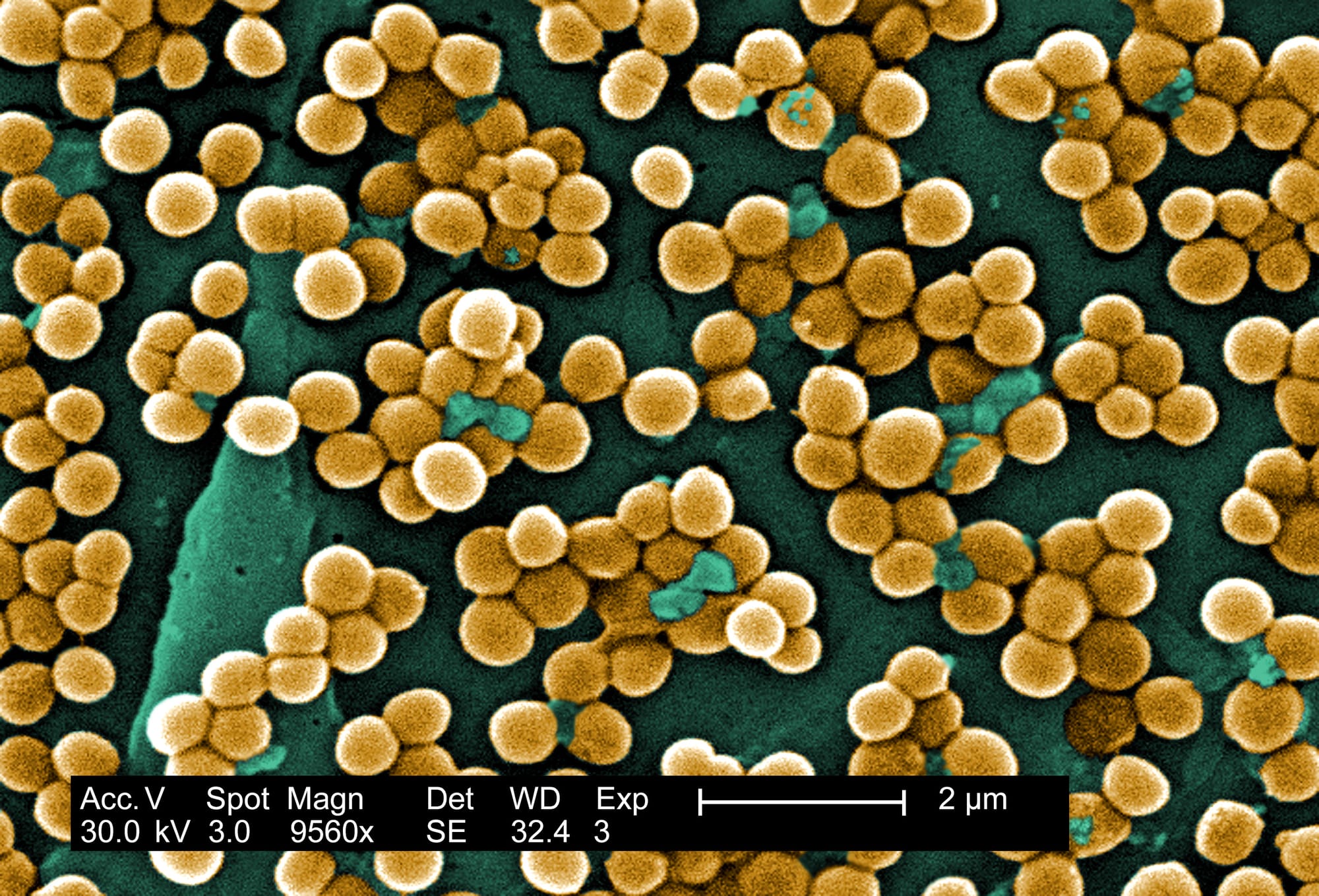
Alexander Fleming described this phenomenon when he discovered the first antibiotic, penicillin, in the 1920s, warning that if bacteria are exposed to the very thing designed to kill them in small quantities, they could develop natural resistance to the treatment. By the late 1940s, this warning was deemed true with the first penicillin-resistant bacteria, Staphylococcus aureus, sweeping hospitals across the United States. The CDC describes antimicrobial resistance as what happens when germs develop the ability to defeat the drugs designed to kill them. Resistant bacteria survive treatment and pass that ability on as they multiply.
The CDC warns that antibiotic resistance is one of the greatest threats the world is facing to public health, but research and development has become stagnant. Of the 90 drugs in clinical trials, the WHO counts only 15 as innovative, meaning they meet at least one of its tests, such as a new chemical class, a new target, or a new way of killing bacteria. Only five of those 15 work against bacteria the WHO ranks as critical threats. Many of the rest are variations on antibiotics bacteria already resist.
Undiscovered Antibiotics
AI models can screen millions of potential chemical compounds far faster than researchers could test them in a lab. Generative models can also propose molecules that have never existed, seen first-hand at MIT in 2025 in the Collins Lab.
The lab was able to synthesize two entirely new antibiotics against drug-resistant gonorrhea and MRSA. The team began with 45 million fragments made entirely of simple chemicals, the building blocks of antibiotics, and used AI models to narrow them to 4 million. The models were trained to detect antibacterial activity. The 4 million fragments were then narrowed to 1 million using machine learning models trained to filter toxicity to humans and similarity to pre-existing antibiotics. From the 1 million fragments, one fragment named, F1, showed promise against drug-resistant gonorrhea, and two algorithms used F1 to construct 7 million full molecules and screened them for antibacterial activity. Out of the 7 million molecules, two of them were able to be synthesized in the lab.
One of them, NG1, killed drug resistant gonorrhea and cleared the infection in mice. While the compound still requires human trials and years of safety testing, the AI models were able to assist researchers with scanning millions of fragments and synthesizing completely new molecules, pushing the research and development pipeline in the forward direction.
Rediscovered Antibiotics
In my workplace, the physicians start treatment before culture results come back, using an antibiogram to choose the drug. An antibiogram is a report generated from a health system’s culture data, showing what percentage of bacterial isolates is susceptible to which antibiotic. However, antibiograms have very generalized data and don't account for individual susceptibility, leading physicians to prescribe more general antibiotics which target a larger variety of bacteria and increase exposure to the drugs, increasing the likelihood of resistance.
AI models are able to help physicians better utilize the drugs that we already have, combatting over-prescription. According to the Mayo Clinic, one-third of antibiotic usage in people is unnecessary, adding to the risk of bacteria becoming resistant. In 2022, Stanford researchers created individual antibiograms, using machine learning models trained on individual health data to predict susceptibility to a particular antibiotic. For a Boston dataset of 16,000 urinary tract infections, the AI models were able to match the clinician coverage while changing ciprofloxacin, a common antibiotic, to a more narrow alternative, decreasing the likelihood of unneeded bacterial exposure.
A Tool for the Future
Antibiotic resistance moves against the clock, with harmful bacteria adapting to drugs faster than science can keep up. AI has the potential to match that speed with the help of increasing clinical research and development and growing awareness of overprescription and responsible antibiotic use. The tool to save a projected 39 million lives is here, and we have a moral and ethical obligation to use it.
Aditi Rege is a third-year pre-medical student studying Health Sciences. She was previously a Medical Assistant at Dr. Vijaya RadhaKrishna Pediatrics and has done research on Malaria parasites, aiding in studies looking at potential drug targets for the parasite.

“All human beings are born free and equal in dignity and rights,” declares Article 1 of the Universal Declaration of

This fall, Northeastern's Khoury College of Computer Science replaced its undergraduate data science programs with artificial intelligence programs.


The 62nd Robert D. Klein Lecture made the case that AI is making us more human. The audience missed the


Two inaugural courses are asking students in the social sciences to grapple with artificial intelligence through the lens of the
Northeastern students on technology, policy, and society. Every Thursday.